
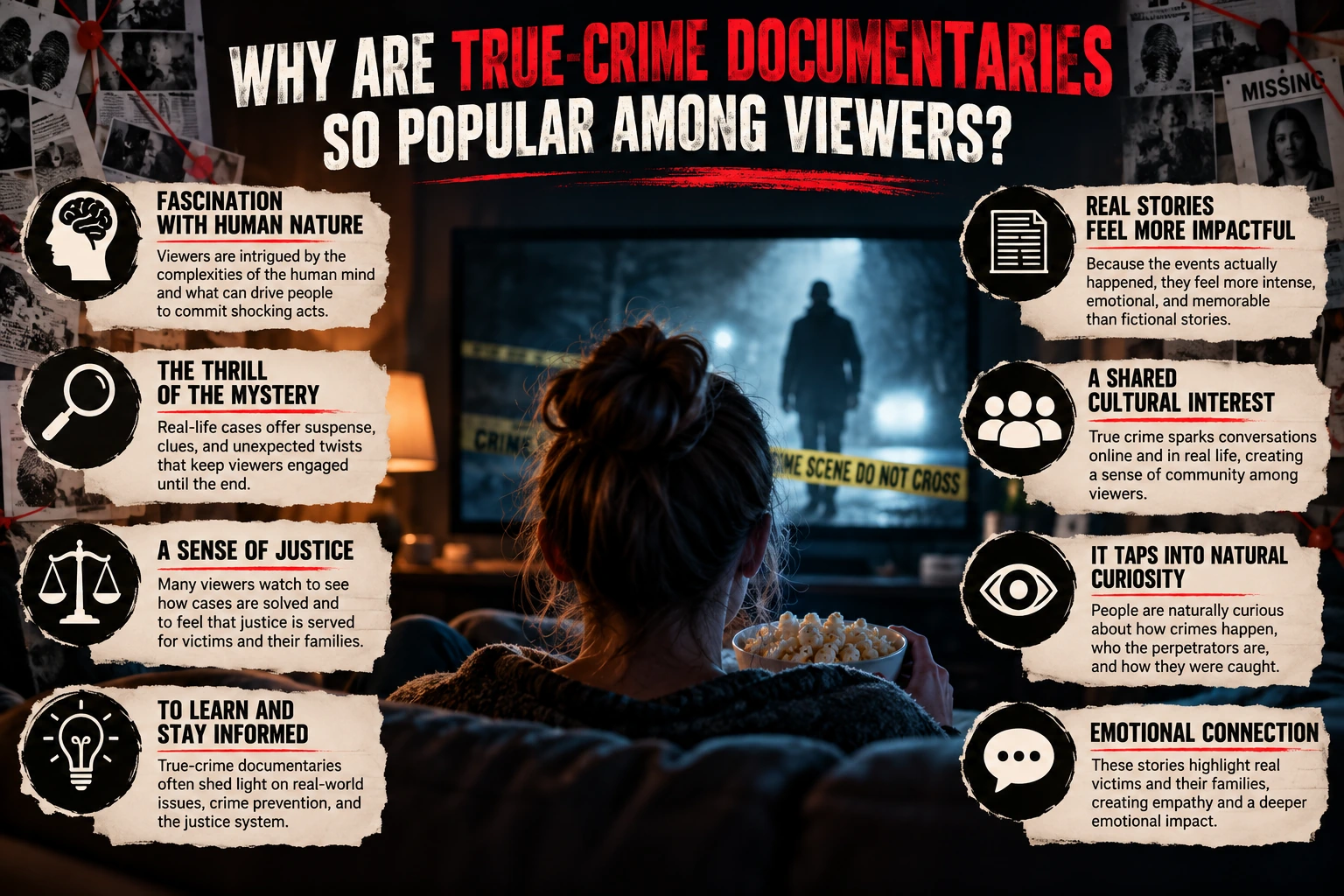
True-crime documentaries have become a popular form of entertainment, attracting viewers who want to understand real criminal cases, investigate unanswered questions, and learn about the people involved. These documentaries explore everything from historical mysteries and missing-person investigations to complex fraud cases and courtroom trials. Their combination of real events, investigative storytelling, and psychological insights keeps audiences interested. However, their appeal goes beyond suspense, reflecting human curiosity about crime, justice, and the reasons people behave as they do.
1. Human Curiosity About Real-Life Mysteries
One of the main reasons true-crime documentaries attract viewers is the desire to understand events that are difficult to explain. People naturally seek answers when a case contains unanswered questions, conflicting accounts, or unexpected developments.
Documentaries often present evidence, interviews, timelines, and investigative discoveries in a structured format. Viewers can follow the information and consider different explanations as the story unfolds.
Cases involving missing people, unexplained events, or disputed evidence may be particularly compelling because audiences want to understand what happened and why. When a case remains unresolved, the unanswered questions can make it even more memorable.
2. The Appeal of Suspenseful Storytelling
Although true-crime documentaries discuss real events, many use storytelling techniques also found in fictional thrillers. Episodes may reveal evidence gradually, introduce new witnesses, or revisit earlier assumptions.
This structure creates anticipation and encourages viewers to continue watching. A documentary may begin with an important discovery, explain the investigation’s background, and then show how new information changes the case.
The difference is that real people and actual events are involved. Responsible filmmakers must therefore balance suspense with accuracy and avoid exaggerating evidence simply to make a story more dramatic.
3. Understanding Criminal Psychology
Many viewers are interested in understanding why people commit crimes and how certain behaviors develop. True-crime documentaries sometimes explore motives, decision-making, manipulation, deception, and patterns of behavior.
These discussions can help audiences consider how personal circumstances, social environments, and individual choices influence criminal behavior. They may also highlight the limitations investigators face when trying to understand a person’s motives.
However, documentaries should not be treated as a substitute for professional psychological assessment. A person’s behavior cannot always be explained through a simple label, and speculation about mental health can create misleading stereotypes.
4. Learning About Investigations and Forensic Science
True-crime documentaries often explain how investigators gather evidence and reconstruct events. Viewers may learn about fingerprint analysis, DNA testing, digital records, surveillance footage, witness interviews, and forensic examination.
These details can make complex investigations easier to understand. They also demonstrate that solving a case may require cooperation among detectives, forensic specialists, legal professionals, and other experts.
At the same time, forensic evidence is not always conclusive. Results must be interpreted in context, and investigative mistakes can affect the outcome of a case. Well-researched documentaries explain these limitations rather than presenting every scientific technique as infallible.
5. The Search for Justice and Accountability
Many true-crime stories focus on whether justice was achieved. Viewers may become invested in cases involving wrongful convictions, overlooked evidence, investigative failures, or long-delayed legal proceedings.
These stories can encourage discussions about victims’ rights, due process, law enforcement accountability, and the importance of reliable evidence.
Some documentaries have also brought renewed attention to cases that received limited public interest when the events first occurred. However, increased attention does not automatically resolve a case, and public speculation can sometimes interfere with the privacy of people involved.
6. Streaming Platforms Make True Crime Accessible
Streaming services and online video platforms have made true-crime content easier to discover and watch. Audiences can explore documentaries about cases from different countries, decades, and legal systems.
Series formats allow filmmakers to examine complicated investigations across several episodes. Viewers can follow the development of a case without needing to understand every detail at once.
Recommendations based on viewing activity may also introduce people to related documentaries. This convenience has helped true crime become an accessible entertainment category for audiences with different interests.
7. Discussion and Online Communities Increase Interest
Social media has created spaces where viewers discuss documentary episodes, compare theories, and share information about cases. Online conversations can introduce different perspectives and encourage people to examine details they may have missed.
However, online discussions also carry risks. Unverified accusations, identifying information, and unsupported theories can harm innocent people or distress victims’ families.
Viewers should distinguish confirmed facts from speculation and avoid treating social media popularity as evidence that a particular theory is correct.
8. The Emotional Connection to Real People
True-crime documentaries frequently explore the experiences of victims, families, survivors, and communities affected by crime. These personal accounts can help audiences understand the lasting emotional consequences of violence, fraud, and loss.
For some viewers, this human perspective makes the subject more meaningful than a fictional mystery. It can also encourage conversations about prevention, personal safety, and support for affected families.
Responsible documentaries should prioritize victims’ dignity and avoid turning real suffering into sensational entertainment.
Are True-Crime Documentaries Always Reliable?
Not every documentary presents events in a fully balanced way. Editing choices, selective interviews, dramatic music, and incomplete information can influence how viewers interpret a case.
To develop a more informed understanding, compare important claims with reliable reporting, official records, and available court documents. Remember that an accusation is not the same as a proven fact and that people should not be judged solely on a documentary’s presentation.